
Chronic anxiety and fear are not simply psychological habits. For many people, they represent a nervous system that has learned, through repeated experience or direct trauma, to operate in a sustained state of threat activation.
Understanding how neurofeedback addresses this at a neurological level can help clarify whether it is a relevant option.
What Neurofeedback Does
The brain produces electrical activity in the form of brainwaves.
Different states of arousal, focus, and calm correspond to different brainwave patterns. In chronic anxiety and fear-based conditions, certain patterns tend to dominate: elevated high-frequency beta activity is associated with hypervigilance and rumination, while alpha wave activity, which supports calm and integration, is often reduced.
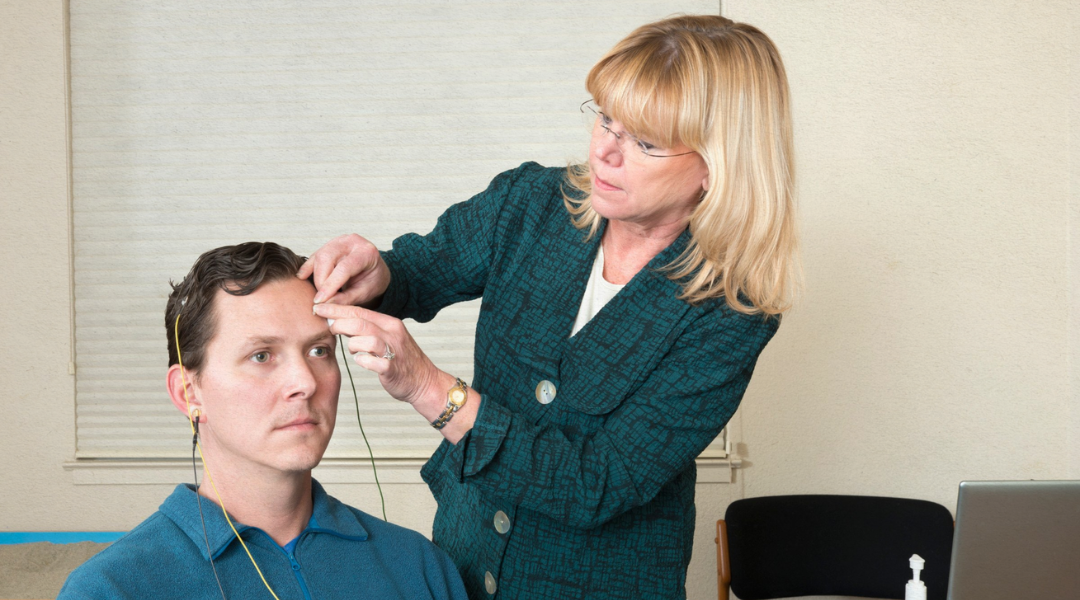
Neurofeedback is a form of biofeedback that monitors brainwave activity in real time and provides the brain with information about its own patterns.
Sensors placed on the scalp record electrical activity. That data is fed into a program, often a game or video, that responds to the brain’s output. When the brain produces more regulated patterns, the feedback is positive. When it shifts toward dysregulated patterns, the feedback changes accordingly.
The brain responds to this information by adjusting.
Over the course of multiple sessions, those adjustments can become more consistent, and the new patterns can begin to stabilize. The process is not about conscious effort or technique application. It occurs at a subconscious, neurological level.
How This Applies to Chronic Anxiety
When the nervous system has been in a state of chronic activation, the anxiety is not simply a thought pattern or a habit of interpretation.
Neural pathways that favor threat detection have been reinforced over time. The amygdala, which functions as the brain’s threat-detection center, may remain persistently overactive. The prefrontal cortex, which provides regulatory input to calm the fear response, may be underperforming in that function.
Neurofeedback works at the level of those patterns directly. Rather than providing tools to manage anxiety after it has activated, it trains the brain toward a different baseline. Many people who have completed a course of neurofeedback describe a reduction in resting anxiety rather than an improvement in coping. The distinction is clinically meaningful.
Most treatment courses involve somewhere between 20 and 40 sessions. Changes tend to persist after treatment ends, which differentiates it from interventions that require ongoing use to maintain effect.
Neurofeedback and Trauma-Based Fear
When fear is rooted in trauma, the nervous system is not malfunctioning.
It is responding according to what it learned during genuinely threatening experiences. The difficulty is that those responses persist in contexts that are no longer dangerous. The threat-detection system remains calibrated to a prior threat environment.
Trauma reliably produces specific changes in brain activity: increased activity in fear-processing regions and decreased regulatory capacity in areas responsible for dampening that response. Traditional trauma therapy addresses this through memory processing and narrative reconstruction, which is important and often effective. However, some people complete significant trauma therapy and find that the physiological fear response remains largely unchanged. This is because the neurological encoding of fear does not always shift through verbal processing alone.
Neurofeedback addresses the regulatory deficit directly.
It supports the prefrontal cortex in developing greater capacity to modulate the amygdala’s output. It trains the nervous system toward patterns associated with safety and presence rather than threat. Importantly, it does not require the person to engage with traumatic content during sessions, which makes it viable for individuals for whom direct trauma processing carries a high activation risk.
Research on neurofeedback in PTSD and trauma-related anxiety has shown meaningful symptom reductions, with outcomes that tend to hold over time.
How It Relates to Other Treatments
Neurofeedback is not a replacement for other clinical interventions.
It is often most effective as a component of a broader treatment plan. Some people find that once neurofeedback has reduced baseline nervous system activation, other therapeutic work becomes more accessible. Stabilization at the neurological level can create more room for the cognitive and relational work that other modalities support.
It is also worth noting that neurofeedback does not require verbal processing or articulation of experience. For people whose anxiety or trauma is preverbal, or for those who have engaged in extensive talk therapy without sufficient relief, this is a meaningful distinction.
A Note on Fit and Expectations
Neurofeedback is not effective in the same way for every person, and outcomes vary. It is a structured, clinically supported process that requires consistent engagement over time. It is not an immediate intervention.
What the evidence does support is that for many people with anxiety and trauma-related fear, nervous system regulation and symptom severity can improve meaningfully with this approach.
At Alliance for Healing, neurofeedback is offered as part of a trauma-informed, relationally grounded clinical framework.
If chronic fear or anxiety is affecting your functioning and other approaches have provided incomplete relief, a clinical consultation can help clarify whether neurofeedback is an appropriate next step.